If you are planning to print premium photo prints or posters, you’ve probably seen the term “300 GSM paper.” But what does it actually mean? Is it thick enough for wall art? Is it better than 250 GSM?
In this guide, we explain everything you need to know about 300 GSM paper — thickness, feel, use cases, and whether it’s ideal for professional photo printing like pictik.in.
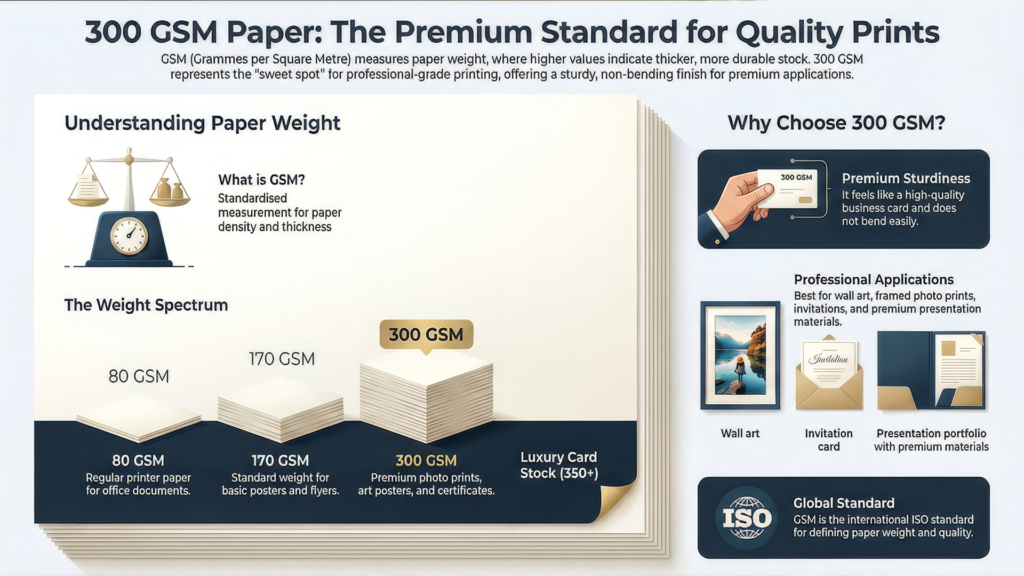
GSM stands for Grams per Square Meter. It is a measurement used to define the weight of paper.
It does not directly measure thickness, but in most cases, higher GSM paper feels thicker and more durable.
In simple terms:
Higher GSM = Heavier paper = Usually thicker and stronger feel.
• 80 GSM – Regular printer paper
• 170 GSM – Standard poster paper
• 300 GSM – Premium photo & poster print stock
• 350+ GSM – Heavy card stock used for luxury invitations
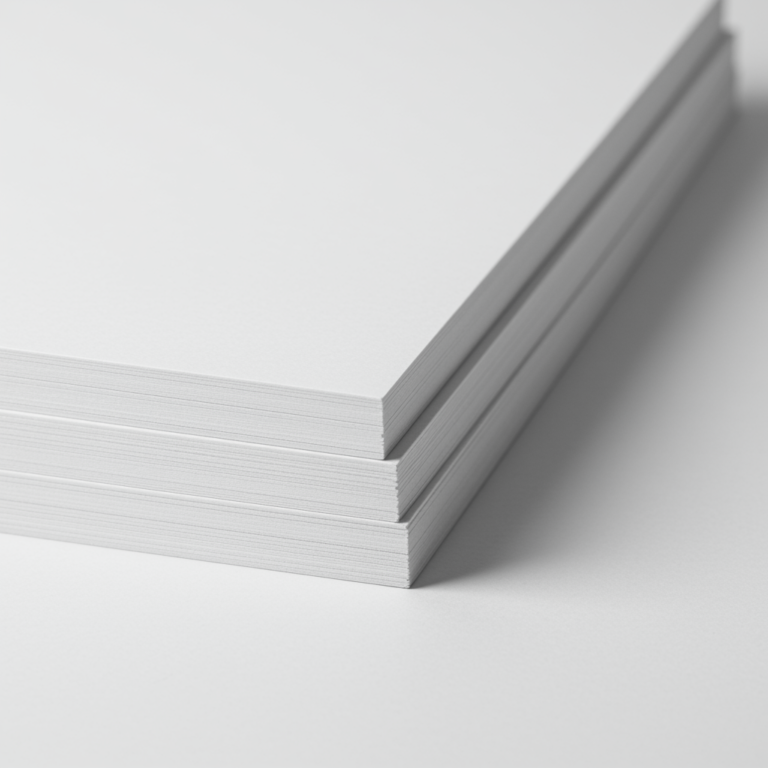
Although GSM measures weight and not exact thickness, 300 GSM paper feels noticeably thick and sturdy in hand.
It is much stronger than regular 80 GSM printer paper and does not bend easily.
In fact, 300 GSM paper feels similar to a premium business card or a high-quality art print stock. It holds its shape well and provides a professional, durable finish — especially when used for wall posters or framed photo prints.
If you want prints that feel premium, durable, and professional, 300 GSM paper is one of the best choices available. It offers the right balance between thickness and flexibility — strong enough for framing, yet smooth enough for high-quality photo and poster printing.
For photo prints, art prints, premium certificates, invitation cards, and framed wall décor, 300 GSM stock delivers a noticeably richer feel compared to regular paper.
However, if you’re printing simple office documents or bulk flyers, lighter paper like 80–170 GSM is usually more cost-effective.
In short:
Choose 300 GSM for premium presentation
Choose lower GSM for everyday printing
If you are planning to print custom photo posters or wall art, always check both GSM and finish (matte or glossy) before finalizing.